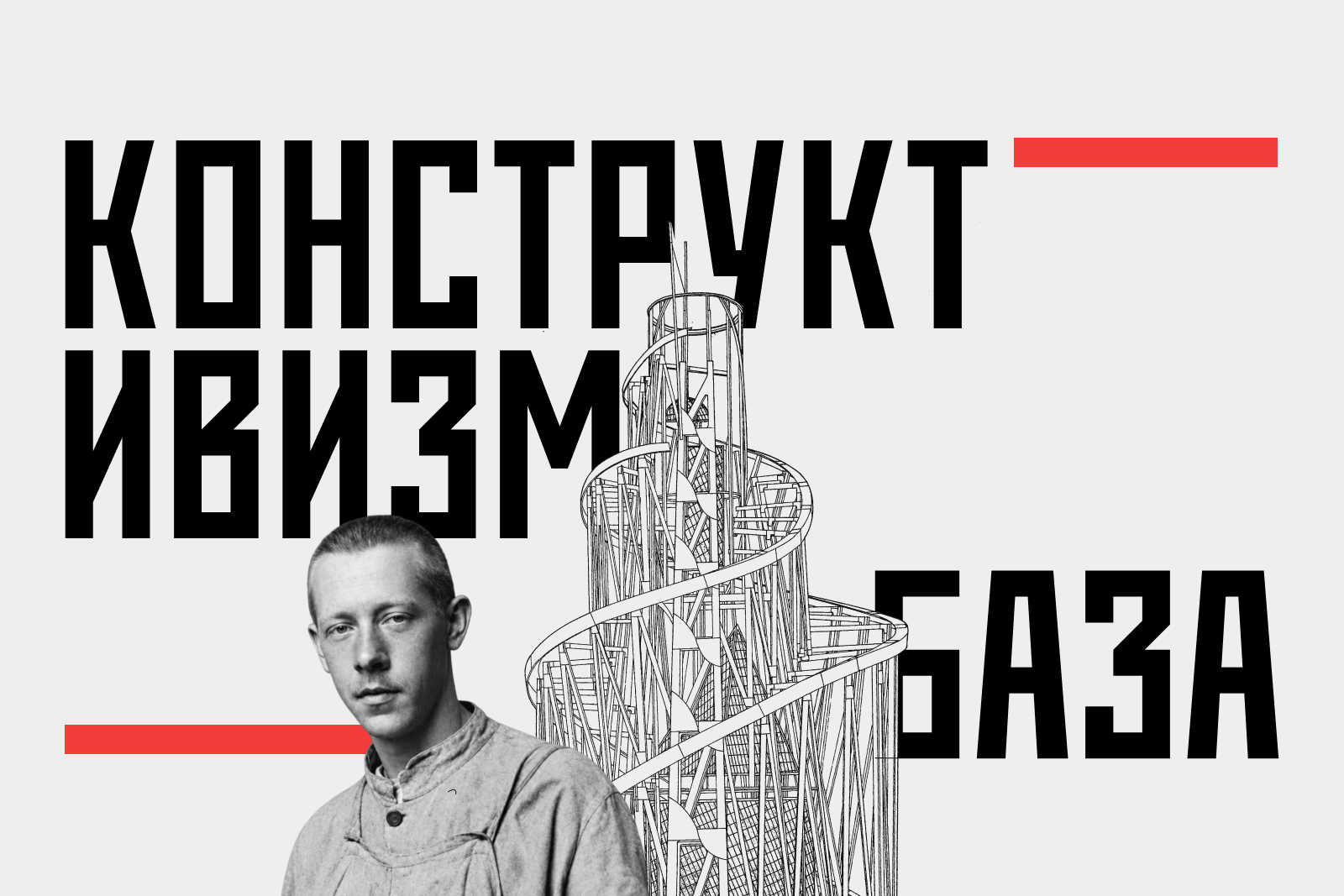
Russia’s first permanent exhibition dedicated to the history of Constructivism.
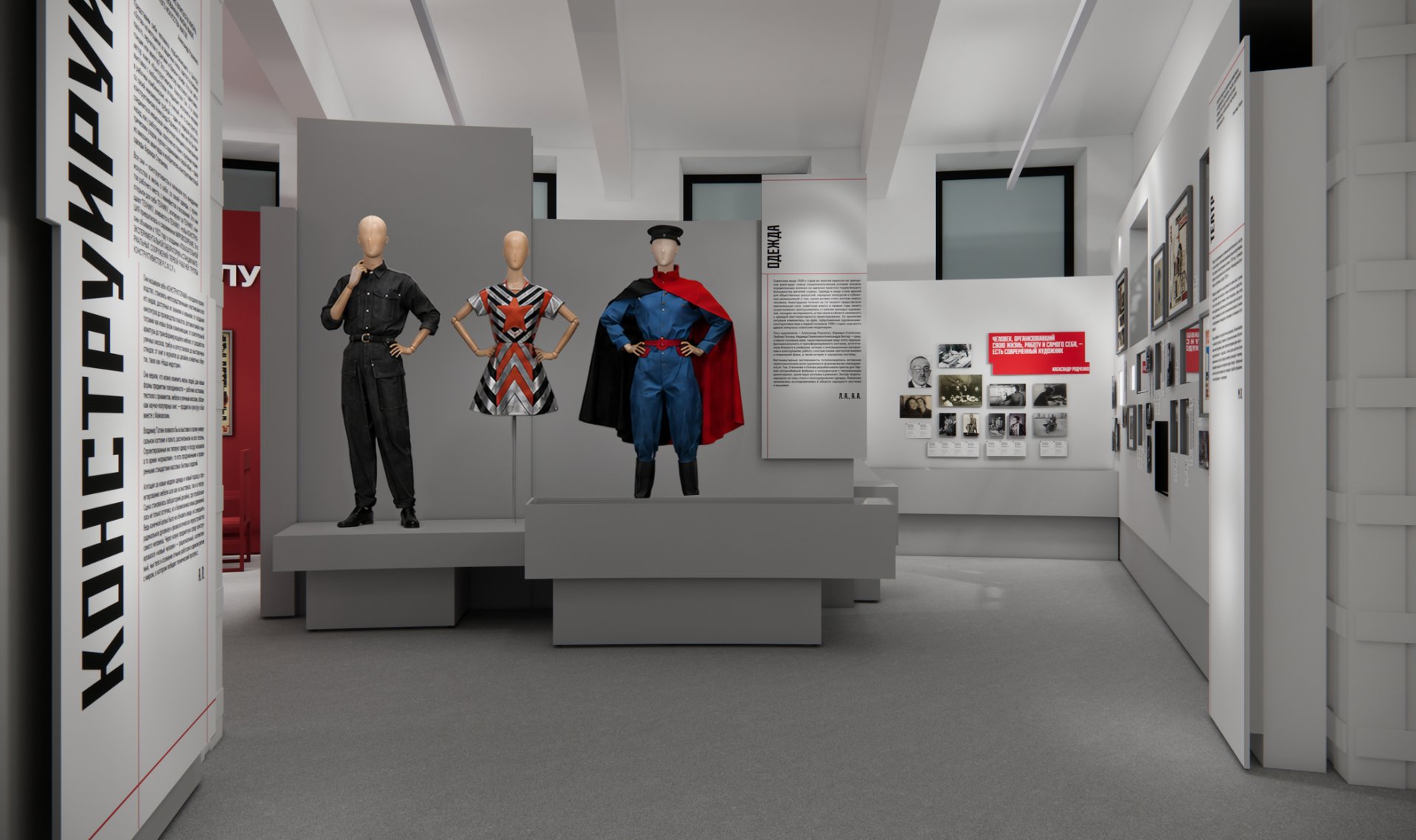
Constructivism. A User’s Guide explores the main stages in the development of the movement, from artistic experiments to the practical application of its ideas. The exhibition brings together around a hundred research-based reconstructions from the Centre’s collection and original works from major Russian museums and private collections.
Until 15 December, tickets for the permanent exhibition are available at a special price. Each ticket also includes admission to the Centre’s temporary exhibition, Bread, on the same day.
In the 1920s, a small group of artists decided to devote their work to improving the lives of ordinary people. The state, then engaged in building a new society, needed fresh ideas about how people should live, work and spend their leisure time. An alliance between artists and the authorities in the interests of society seemed to hold extraordinary promise. The Constructivists designed residential buildings and workers’ clubs, created clothing, furniture and everyday objects, and challenged established ideas about art and the role of the artist. Much of what they envisaged remained on paper, in sketches and notes, but the visual and intellectual potential they had accumulated was immense. A century later, however, Constructivism is still very much with us. The influence of Constructivism can still be seen throughout everyday life: in the convenience of ordinary objects, the organisation of urban and personal space, and the clear, economical graphic language of everything from shop signs to smartphone screens. Constructivism has become a timeless metaphor for the creative transformation of the world, a model for the development of individuals and society.
Exhibition Structure
The exhibition is conceived as an evolving project, with its thematic sections will be updated through the rotation of works from museums and private collections. Each new display will add to the story of Constructivism, inviting visitors to rediscover the movement through new artefacts of the period.
Major museums lending works for long-term display include the State Russian Museum, the State Tretyakov Gallery, the Schusev State Museum of Architecture and the Pushkin State Museum of Fine Arts. Thanks to these partnerships, visitors will be able to see original works by Alexander Rodchenko, Vladimir Tatlin, El Lissitzky, Olga Rozanova, Alexander Vesnin, Liubov Popova, Alexandra Exter, Varvara Stepanova, Gustav Klutsis, Solomon Telingater and others.
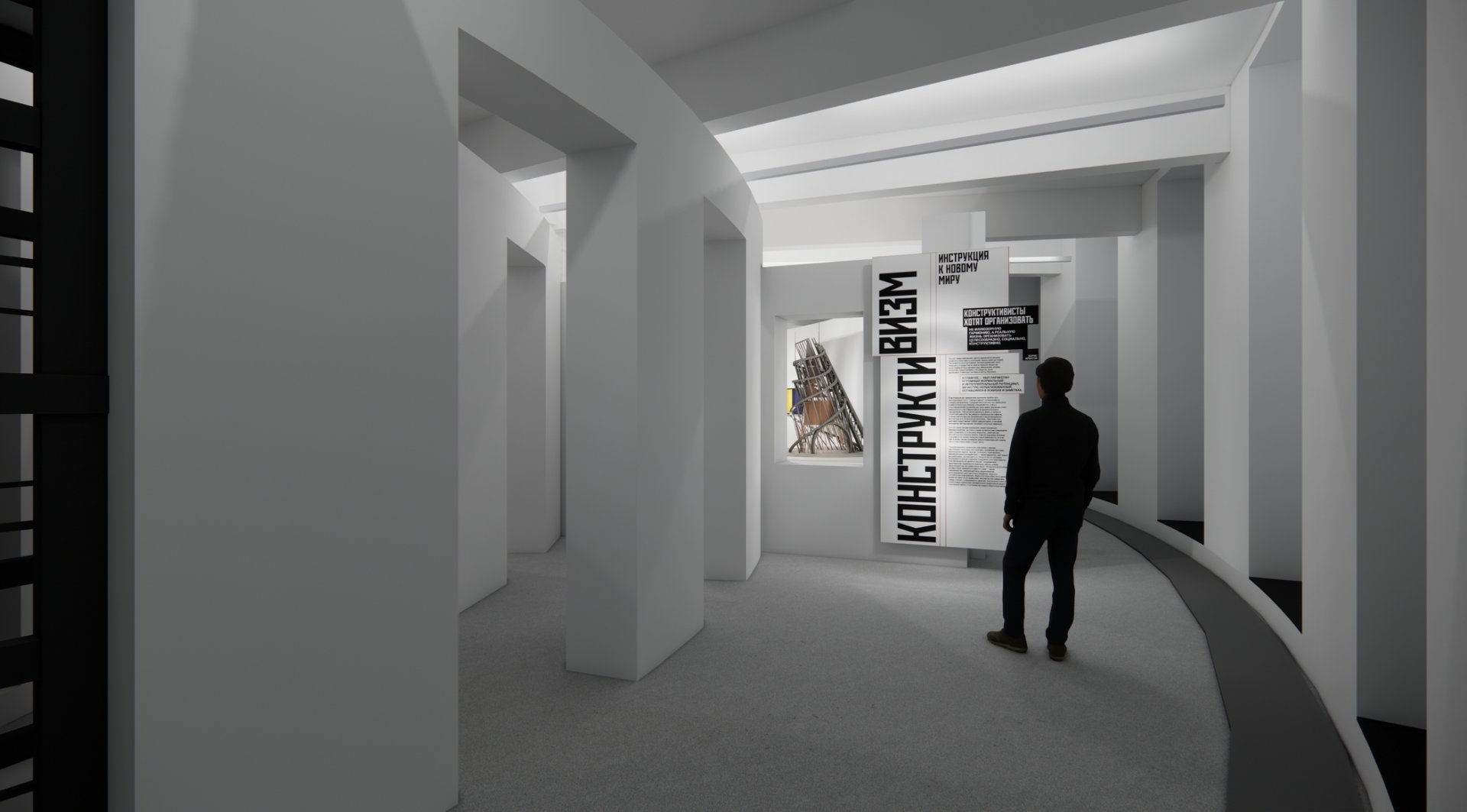
These artist-inventors proposed not simply a new style but an entire philosophy — a set of instructions for a new world. The exhibition therefore takes the form of a step-by-step guide, with six sections whose slogan-like titles recall the manifestos of the period. The six sections reflect the stages in the movement’s development.
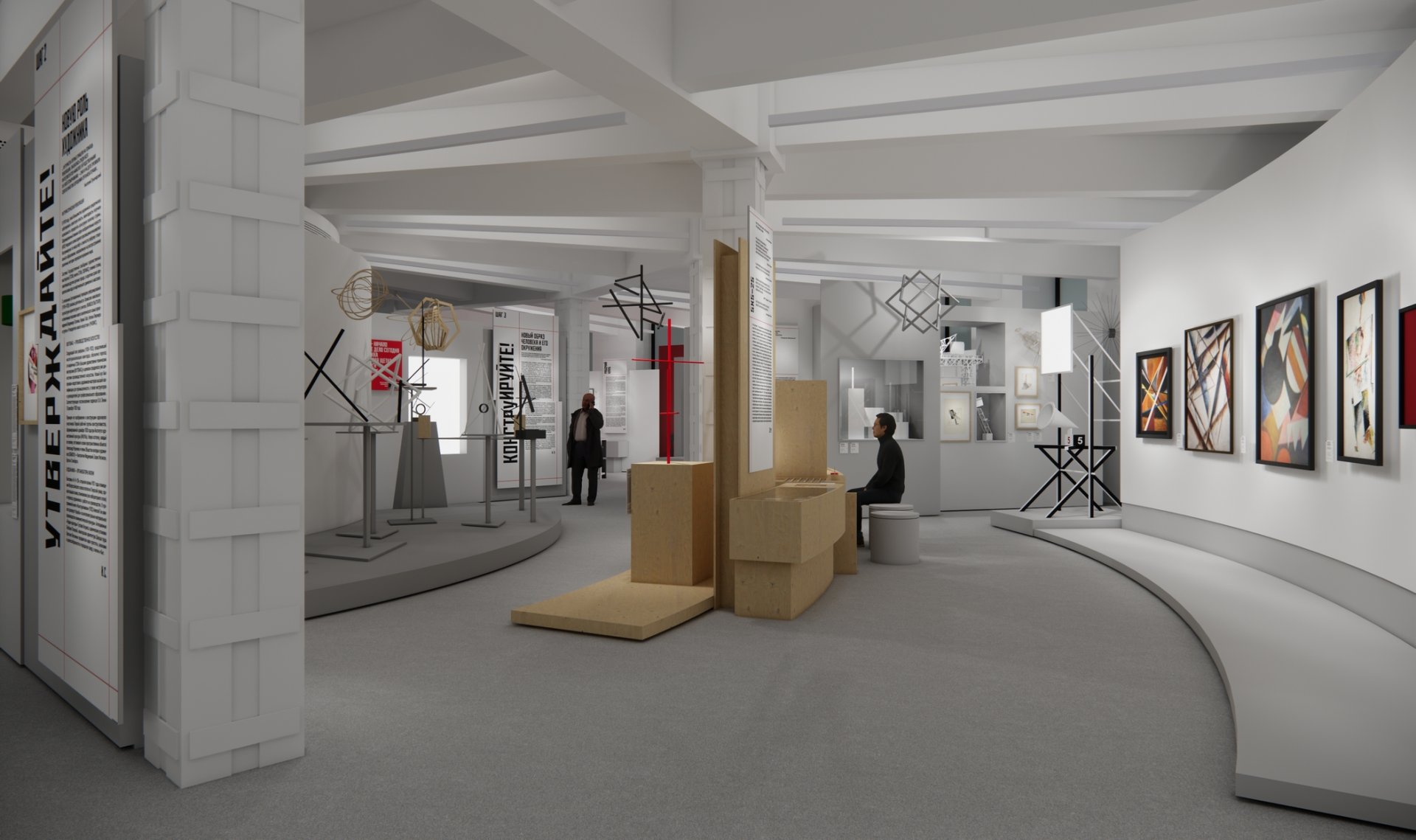
Seek! A New Path for Art immerses visitors in an era of deconstruction and the birth of non-objective art, marked by a debate between Kazimir Malevich and Vladimir Tatlin about the direction art should take. The paintings in this section, on loan from leading museums, are landmark works of the avant-garde, embodying two distinct approaches to art.
Affirm! A New Role for the Artist explores the ‘laboratory’ period, when artists were grappling with the concept of construction and, for the first time, taking an active part in shaping the country’s cultural policy. The section features reconstructions of three-dimensional non-objective works by members of OBMOKhU (the Society of Young Artists), associated with a new technique involving a transition from two-dimensional to three-dimensional form. These include constructions by Alexander Rodchenko, Vladimir and Georgii Stenberg, Konstantin Medunetsky, Karl Ioganson, Gustav Klutsis, Naum Gabo and Liubov Popova.
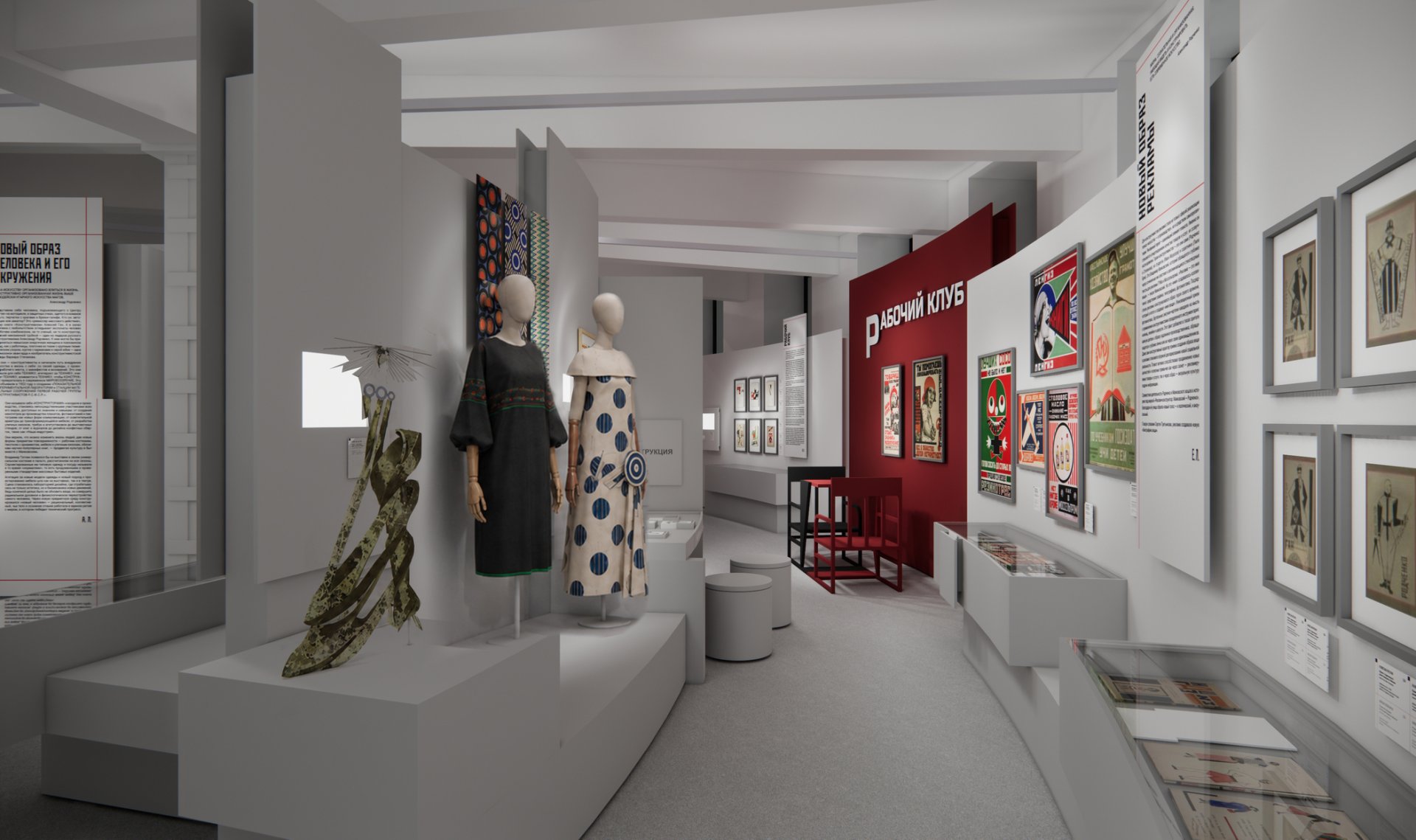
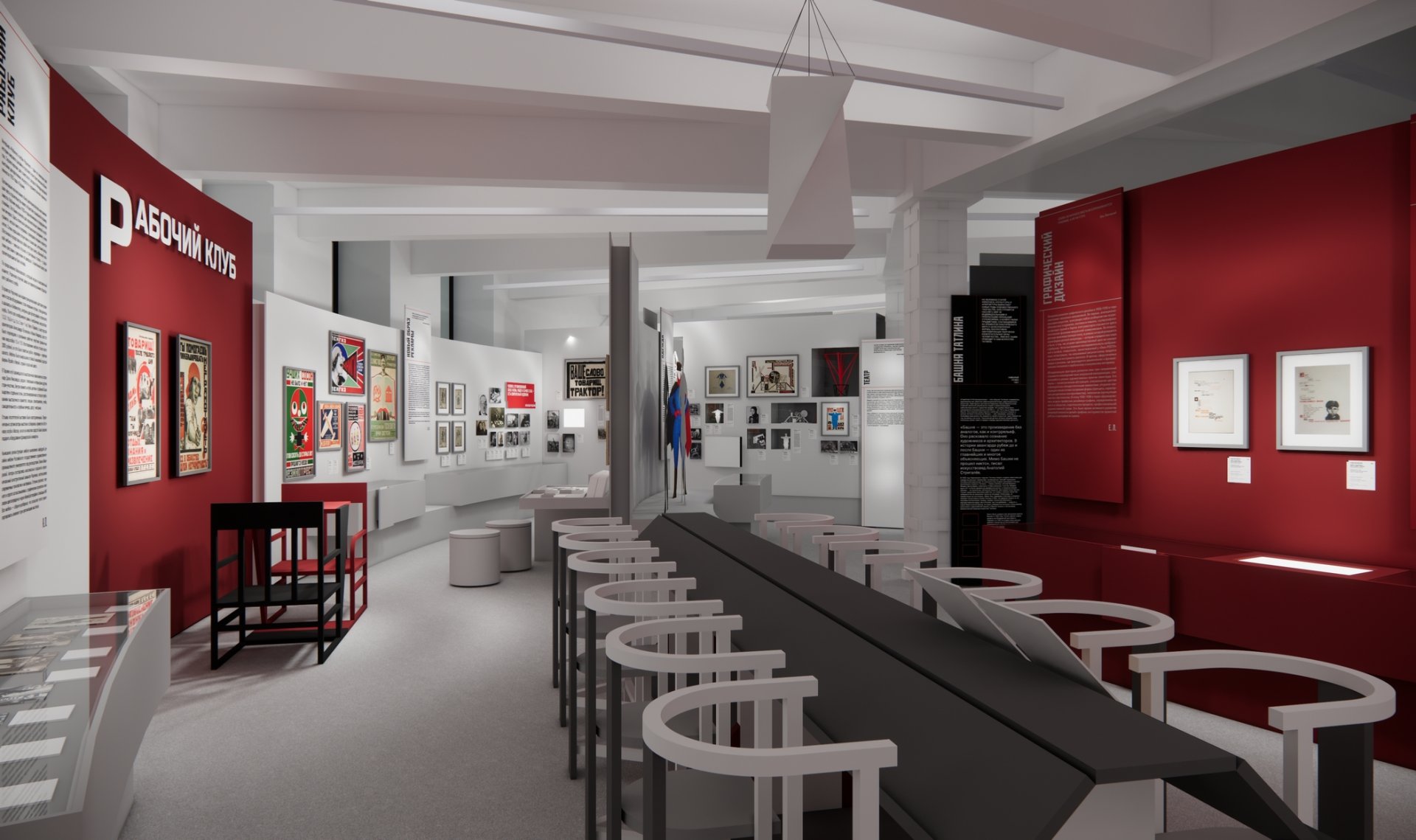
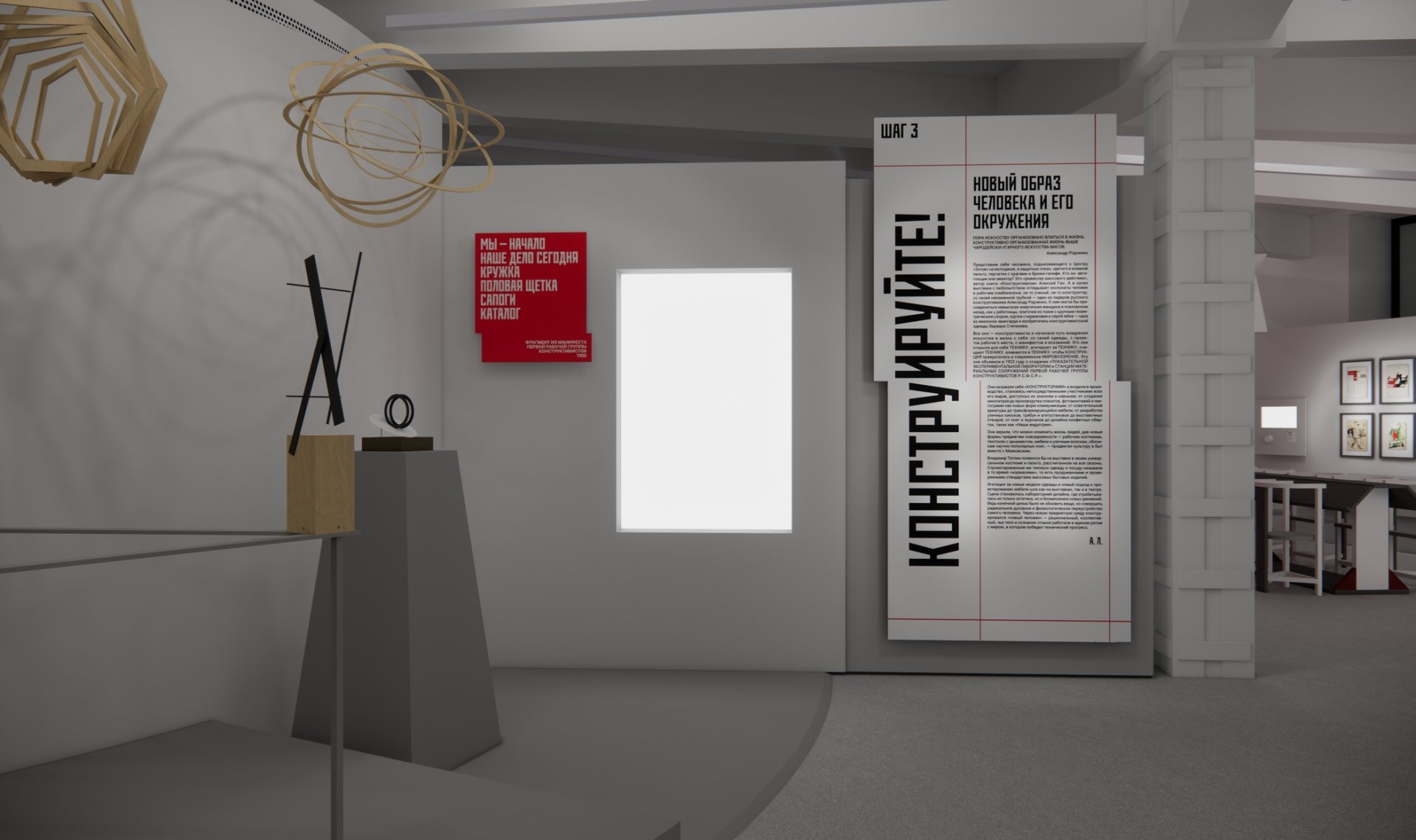
Construct! A New Vision of People and Their Environment focuses on the introduction of art into everyday life. Its centrepiece will be a full-scale reconstruction of Alexander Rodchenko’s Workers’ Club, which embodied the idea of a new concept of purposeful leisure.
Invent! The Language of New Media explores a revolution in perception as artists embraced photography and filmmaking, turning montage and unexpected camera angles into a universal visual language of the age. The section will feature photographs by leading avant-garde photographers from the Zotov Centre collection: Alexander Rodchenko, Arkady Shaikhet and Boris Ignatovich. Visitors will also discover some of the most important innovations in avant-garde cinema through works by Lev Kuleshov, Dziga Vertov, Sergei Eisenstein and others.
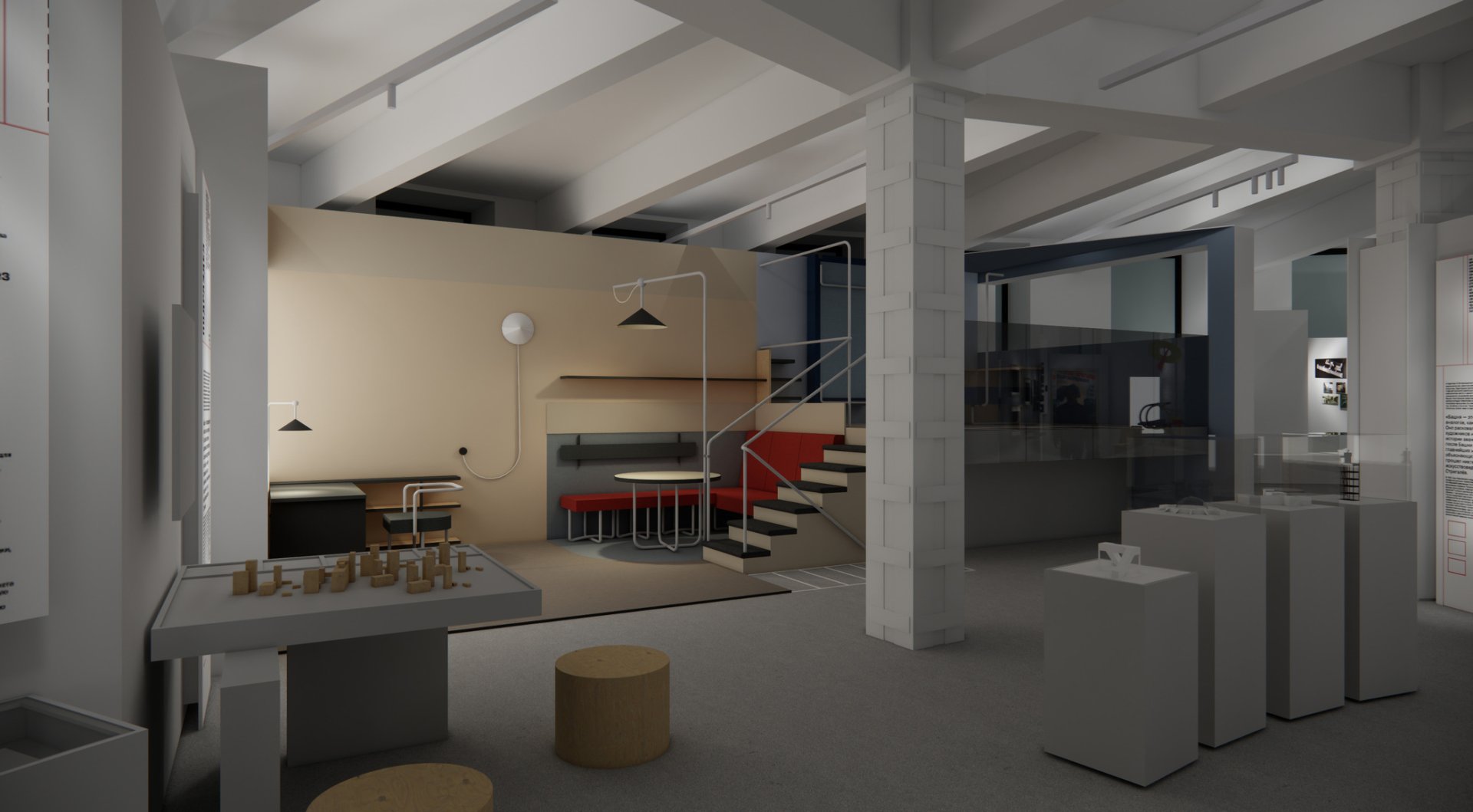
Create! New Objects and Spaces presents Constructivism in its mature phase. The principal exhibit will be a full-scale reconstruction of a Type F residential unit designed by Moisei Ginzburg, with an interior designed by El Lissitzky — an embodiment of the dream of a comfortable, functional environment.
The final section, Dream! Of the Future, developed in collaboration with the Centre’s strategic partner, the technology company YADRO, brings the exhibition to an open-ended conclusion. The Technology subsection will feature a series of interviews with prominent figures in architecture, design, education and engineering. Over the past century, Constructivism has moved beyond the confines of an artistic movement to become a distinctive way of thinking. Its principles — rationality over ornament, function over decoration — continue to find expression in many different fields. To discuss Constructivism today is therefore also to discuss the people who design, create and rethink the world around us. This dialogue with the present continues in a multimedia installation inspired by architect Ivan Leonidov’s City of the Sun, inviting visitors to reflect once more on the dreamers and idealists who once seemed to have the power to change the world.
About the Project
The exhbition marks the culmination of four years of exhibition activity at the Centre, consolidating the research undertaken during that time and bringing together the efforts of leading Russian experts and descendants of Constructivist artists. The project is grounded in thorough research while remaining accessible to a broad audience. Conceived as a laboratory, it allows visitors, regardless of their prior knowledge, to explore the principles of Constructivism for themselves and engage with its ideas. Visitors will find interactive areas devoted to construction, graphic design, film editing and clothing design, as well as creative workshops exploring colour, graphics and three-dimensional form.
The exhibition also marks the beginning of a strategic partnership between the Centre and the technology company YADRO, which shares the philosophy of Constructivism and applies its principles in developing its products.
Curator: Polina Streltsova
Co-curators: Ksenia Kokorina, Anna Koleichuk, Alexander Lavrentiev, Ekaterina Lavrentieva, Alyona Sokolnikova
Research Consultants: Asya Aladzhalova, Liudmila Alyabieva, Kirill Goryachok, Konstantin Dudakov-Kashuro, Maria Lipatova, Olga Muromtseva, Dmitry Nikishov, Andrei Sarabyanov, Maksim Seleznev, Igor Smekalov
Artist: Alexei Tregubov
Music: Vladimir Martynov
Architecture: Planet9
Ahead of the opening, and to mark the Centre’s birthday, Constructivism Days will take place from 20 to 22 November and become an annual event. The programme will coincide with a major launch of digital projects. For researchers studying the avant-garde and Constructivism, the Centre will introduce Zotov.Archive, a digital research project bringing together materials relating to Russia in the 1920s and 1930s: photographs, biographies, archival texts, 3D tours of Zotov Centre exhibitions, scholarly publications and a map of Constructivist heritage. For those discovering Constructivism for the first time, the Centre will also release an introductory video course comprising seven animated episodes exploring the most significant artistic movement of the twentieth century, with scripts by playwright Valery Pecheykin.
The exhibition will also launch a series of regular educational programmes to be held annually. A lecture series beginning in December 2026 will focus on leading figures of the period, including Moisei Ginzburg, Sergei Eisenstein, Liubov Popova, the Vesnin brothers, Alexei Gastev and others.
Two further educational programmes are planned for those wishing to explore the subject in greater depth. In a specially devised course, Zotov Centre collections curator Dmitry Nikishov will examine the ideas artists introduced into architecture, photography and cinema, theatre and graphic design, using examples from each field. A year-long lecture series is also planned, based on the curriculum of the foundation course at VKHUTEMAS. It will cover four disciplines: Graphics, Colour, Volume and Space.

ГЕНЕРАЛЬНЫЙ ПАРТНЕР ЦЕНТРА

СТРАТЕГИЧЕСКИЙ ПАРТНЕР ЦЕНТРА

ГЕНЕРАЛЬНЫЙ МЕДИАПАРТНЕР

СТРАТЕГИЧЕСКИЙ ИНФОРМАЦИОННЫЙ ПАРТНЕР

МЕДИАПАРТНЕРЫ





БИЛЕТНЫЕ ПАРТНЕРЫ





1 серия. Философия и истоки
2 серия. Архитектура