On 30 April, the Zotov Centre will open House 21. Visiting the Artists, an exhibition that invites visitors into the studio apartments of the famous VKhUTEMAS buildings at 21 Myasnitskaya Street. In the 1910s–1930s, these red-brick buildings became one of the key centres of Russian artistic life. Visitors will take an imagined journey through five apartments where leading twentieth-century artists lived and worked: Alexander Rodchenko and Varvara Stepanova, Alexander Drevin and Nadezhda Udaltsova, Pyotr Miturich and Vera Khlebnikova, Gustav Klutsis and Sergei Senkin, and Vladimir Favorsky with his students.
Until 29 April (inclusive), tickets are available at a special 25% discount, the price shown includes the discount.
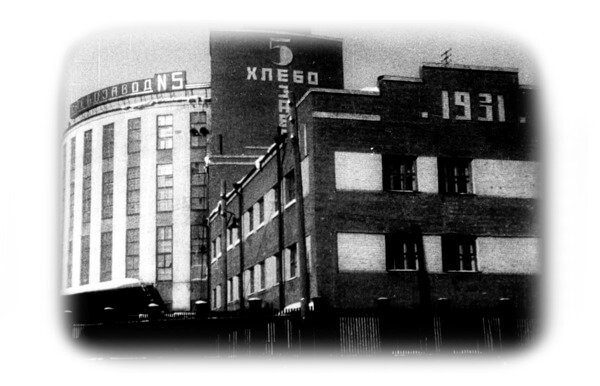
“My home, the house in which I live, is a true bohemian refuge, a kind of Latin Quarter, a Moscow Montparnasse,” wrote the poet Nikolai Aseev, who lived in the building on Myasnitskaya. The address had been associated with art since as early as 1838, when the Moscow Art Society rented an apartment in the Yushkov House. Its artistic life flourished after the Revolution, when the building was subject to the compulsory redistribution of living space and transferred to VKhUTEMAS, which was founded in 1920 and was instrumental in shaping the avant-garde and Constructivism. It soon filled with artists, architects, poets, photographers, and designers, becoming a genuine creative commune where experimentation thrived and new artistic movements took shape.
House 21. Visiting the Artists moves beyond geography, exploring the artist’s home as a space where art is created and continues to live. Visitors enter a metaphorical courtyard, greeted by works by residents including Robert Falk, Alexander Labas, Konstantin Istomin, Vasily Rozhdestvensky, Pyotr Lvov, Pyotr Miturich, and Vera Khlebnikova, depicting façades and views from their studios. From here, they pass into a shared “hallway” with five doors leading into the homes of Alexander Rodchenko and Varvara Stepanova; Pyotr Miturich, and Vera Khlebnikova; Alexander Drevin and Nadezhda Udaltsova; Vladinir Favorsky; and Sergei Senkin.
Moving from one apartment to the next, visitors encounter different emotional states of the house. In one, like-minded people gather for lively debates about old and new art. In another, quiet family evenings unfold. Further on, there is a place of departure and return, from which long journeys begin and which always welcomes them back. This is a home that holds memories of despair and revelation, of births and final farewells.
Each of these moods is conveyed through scent, sound, lighting, interior design, and interactive elements. In Rodchenko’s vibrant apartment, visitors are immersed in the sounds of jazz on vinyl, with notes of coffee and perfume in the air. At the centre stands a table with an authentic Constructivist mahjong set, recreated from the one played by the artists and their guests. The Miturich–Khlebnikova apartment offers a contrasting atmosphere of soft daylight and domestic intimacy, reflecting the creative bond between artist parents and their children. Drevin and Udaltsova’s studio is filled with the scent of fresh paint and oils, with canvases in wooden frames. In the space dedicated to Sergei Senkin, a pioneer of photomontage, visitors can create their own collages using photographs, slogans, and graphic elements.
The exhibition brings together more than 230 original works from 22 museums and private collections, including the State Russian Museum, the State Tretyakov Gallery, the Pushkin State Museum of Fine Arts, the Vladimir Mayakovsky State Museum, the V. I. Dahl State Museum of the History of Russian Literature, the Abramtsevo Museum-Reserve, the Moscow Architectural Institute Museum, the Russian State Archive of Literature and Art, the Russian State Library, the Radishchev State Art Museum, the Rodchenko–Stepanova Archive, the Khlebnikov–Miturich Family Archive, the Favorsky–Shakhovskoy Family Collection, the Lydia Zholtkevich and Georgy Echeistov Collection, the Andrei Kamyshansky Collection, the Anton Kozlov Collection, the MIRA Collection, the Galeev Gallery Collection, the Roman Babichev Collection, and others.
In the run-up to the exhibition, on 17 April, the Zotov Centre, together with Moskvich Mag, will host a public talk with descendants of the featured artists: Ivan Shakhovskoy, Alexander Lavrentyev, Ekaterina Lavrentyeva, and Vera Miturich-Khlebnikova. They will share family memories and personal recollections of the house and life within it. Following the event, Moskvich Mag will publish a feature by Evgenia Gershkovich on artistic dynasties at 21 Myasnitskaya.
Curator: Anna Zamriy
Exhibition architects: Evgeny Ass, Kirill Shiryaev
Graphic designers: ADCdesign
The parallel programme includes a lecture series curated by Elena Sharova, exploring the concept of genius loci in world art. Together with art historians, participants will trace how centres of artistic life shifted over time, and how artists moved their homes, studios, and ateliers with them.
For the first time, the musical programme will extend into the exhibition space itself, with the Studio for New Music hosting jazz “apartment concerts”. Gramophone sessions with the artists’ descendants are also planned, curated by musicologist Fyodor Sofronov.
Zotov.Kino will present a film programme, The House That…, exploring the image of the home in twentieth- and twenty-first-century cinema as a space of contradiction: refuge and trap, memory and projection, intimacy and alienation. The home connects and separates, preserves traces of the past, shapes visions of the future, and remains a utopian idea of the unattainable and the lost. The programme includes films such as Dmitry Davydov’s Transparent Lands, Lars von Trier’s The House That Jack Built, Mascha Schilinski’s Sound of Falling, Ingmar Bergman’s Persona, Joachim Trier’s Sentimental Value, Nikolaus Dostal’s Cloud Paradise, and Georgiy Daneliya’s Afonya.
For younger audiences, a workshop and lecture programme by Young Art Historian magazine will introduce the exhibition’s protagonists through interactive activities. In summer, courtyard games inspired by early twentieth-century childhood will take place in the square near the Zotov Centre. Family design workshops will be led by Lada Shapovalova, curator of the Centre’s children’s programme.
As part of the city walks, participants will retrace the daily route of VKhUTEMAS students and teachers, from 21 Myasnitskaya to 11 Rozhdestvenka, where the Higher Art and Technical Studios were based. These walks will explore not only the buildings themselves, but also the key sites linked to the emergence and development of twentieth-century avant-garde art.
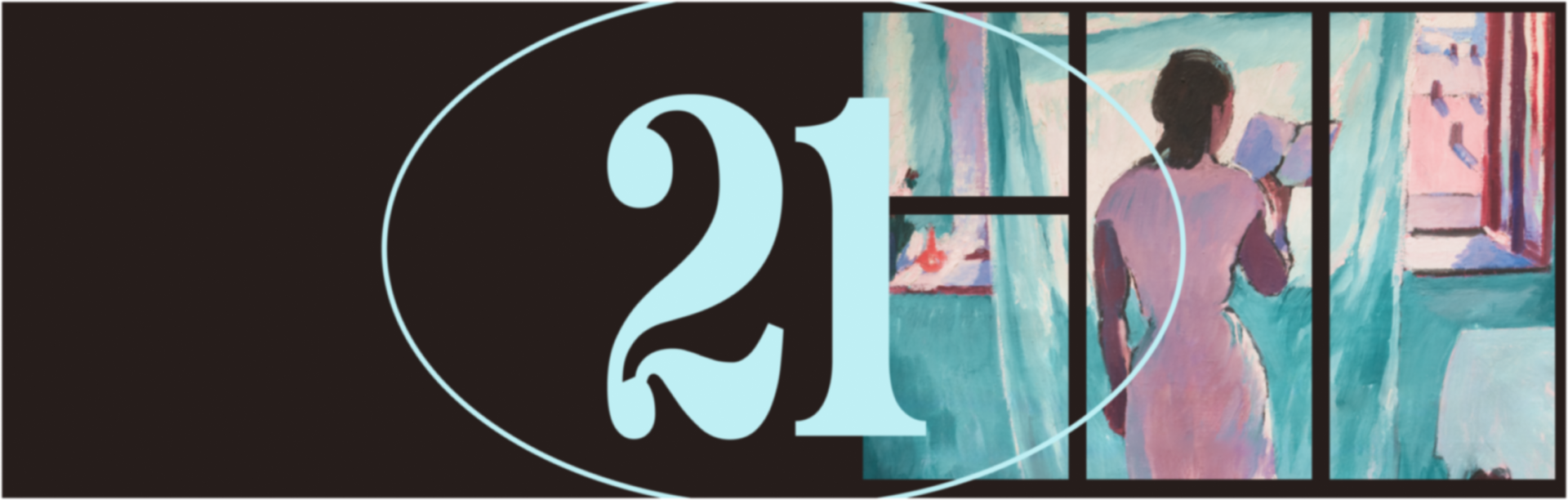
Image on this page: © Russian Museum, St Petersburg
GENERAL PARTNER

GENERAL MEDIA PARTNER

STRATEGIC MEDIA PARTNERS






MEDIA PARTNERS





EXHIBITION PARTNER

FAMILY PROGRAM PARTNER