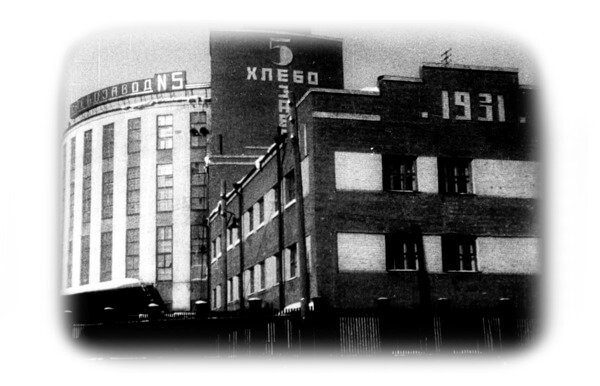

On 25 September, the Zotov Centre and Genpro will open the exhibition Inside the City. The Art of the Architectural Model. For the first time, the project will present the model as an independent form of art and the principal language of architects.
In everyday life, people may encounter models in historical museums, property sales offices, or public spaces. All of them are used for educational or commercial purposes. The new exhibition at the Zotov Centre will offer a fresh perspective on the model, emphasise its artistic value, allow visitors to observe the process of model-making in real time, and demonstrate how the model has become the architect’s most important tool.
The project will bring together works by more than 25 renowned architectural firms, public artists, and designers. Each of the five sections of the exhibition will show how the model preserves the memory of time and place, contributes to the development of the modern urban landscape, and inspires new creative ideas. At the heart of the display will be a model-making workshop, where in real time craftsmen will be creating new models and restoring old ones. For the first time, visitors will be able to glimpse behind the scenes of this painstaking craft.
The section The Model Creates will present the model as a tool for an architect’s creative exploration. These are architectural fantasies, some already brought to life and others still in progress. A highlight of this section will be models by Nikolai Polissky, being shown to the public for the first time: a working model of a land art project in Japan, along with ten sketch models of sculptures for the embankment in Balakhna on the Volga, made from foam tubes. Also of note is a series of models for a hotel project in Yalta by Project Meganom, created from authentic materials, including sand, which capture the distinctive character of the local landscape.
The largest section of the exhibition, The Model Speaks, will reveal how architects use models to reflect on their own work. The most striking example is the model of the Brodsky residential complex by Tsymailo, Lyashenko and Partners. In this model of a building composed entirely of arches, only the shell remains, clearly illustrating the central artistic device on which the design is based.
The models of Totan Kuzembaev, one of Russia’s most celebrated architects working with wood, present buildings in the form of saplings that appear to hang in the air. Visitors will see not only the striking forms of the buildings themselves but also the hidden side of the city, the underground networks of pipes and cables that are usually concealed.
The section The Model Works gives visitors a chance to watch the working process through a glass screen, seeing how craftsmen create new models and restore old ones using both traditional and modern techniques. Another facet of contemporary architectural modelling, dynamic models, is represented by a transformer model from the KAMEN firm.
The section The Model Teaches shows how models help students develop spatial imagination skills and engage with buildings, whether historic or those they aspire to create. This section features works from leading architectural schools. Among them is The Transformer, or Marseilles Soup by the studio of Alexander Brodsky and Nadezhda Korbut. Projects from the entire MARSH master’s group are displayed inside a former transformer substation at Red October. One of the outcomes of the studio’s work was a collective model created by twelve students.
The section The Model Reminds will take us from education to history. Here visitors encounter models of such architectural monuments as Kazan Cathedral in Saint Petersburg and the Cathedral of Christ the Saviour in Moscow. The oldest and most valuable exhibit is a model of the Colosseum by the Italian master Antonio Chichi, dating from the second half of the 18th century, which Catherine II acquired for her son Paul as an educational aid.
Among the most remarkable exhibits is a fragment of the large wooden model of central Moscow, begun in the late 1960s. From 1986 it was on public display in a dedicated hall at the House on Brestskaya. The model was modular, allowing demolished buildings to be quickly replaced with new ones which were under construction. Buildings, foundations, trees, and the waters of the Moskva and Yauza rivers were made from different types of wood. In the mid-2010s the model was dismantled and placed in storage. It was replaced at VDNKh by a new, more technologically advanced model, displayed in a special pavilion. The wooden model of Moscow is not only a scaled-down copy of the city centre at a particular moment in time but also a record of a technique that has since become a thing of the past.
Concept by: Daniil Katritchenko, founder of Genpro.
Curator: Ilya Mukosei.
As part of the accompanying programme to the exhibition Inside the City. The Art of the Architectural Model, there will be lectures, public talks by leading architects and industry experts, and masterclasses led by representatives of renowned architectural firms from across the country.
The project is supported by the Chief Architect of Moscow, Sergey Kuznetsov.
Participants of the exhibition Inside the City. The Art of the Architectural Model
Architecture and design: Totan Kuzembaev, Pole-Design, Genpro, Panacom, AML, Megabudka, PROJECT MEGANOM, TPO Reserve, Tsymailo Lyashenko and Partners, Studio 44, ATRIUM, DDD Architects, DNKag, GA, GAFA, KAMEN, KPLN, Nowadays, UNK Project, SPICH.
Public art and contemporary art: Alexander Ponomarev and Alexey Kozyr, Nikolai Polissky, Rinat Voligamsi, Yuri Avvakumov, Anton Chumak.
Galleries: 11.12 GALLERY, Ruarts Foundation, Stella Art Foundation.
Universities, schools, educational projects: Moscow Institute of Architecture (studio of Alexander Tsymailo and Nikolai Lyashenko; project Auditorium by the studio of PROJECT MEGANOM, Department of the History of Architecture and Urban Planning), MARSH architectural school, project PRO.STRANSTVIE.
Museums: Shchusev Museum of Architecture, MARHI Museum, Zotov Centre.
Also taking part are the Moscow Genplan Institute, the House on Brestskaya (Mosstroyinform), and the model workshop Maket-M.
Principal media partner

Media partners